This week saw a ton of activity in the space industry, with multiple launches, key preparations for commercial crew missions, robots and much more.
Besides all the real space news, there’s also some extreme fan service for Star Wars lovers, courtesy of Disney and Boeing. Now I’m one day closer to my lifelong dream of becoming a real X-Wing starfighter pilot.
Launch startup Rocket Lab has been successfully delivering payloads to orbit for a while now, but earlier this year they announced they’d be moving to a launch system in which the booster they use to propel their spacecraft to orbit is reusable.
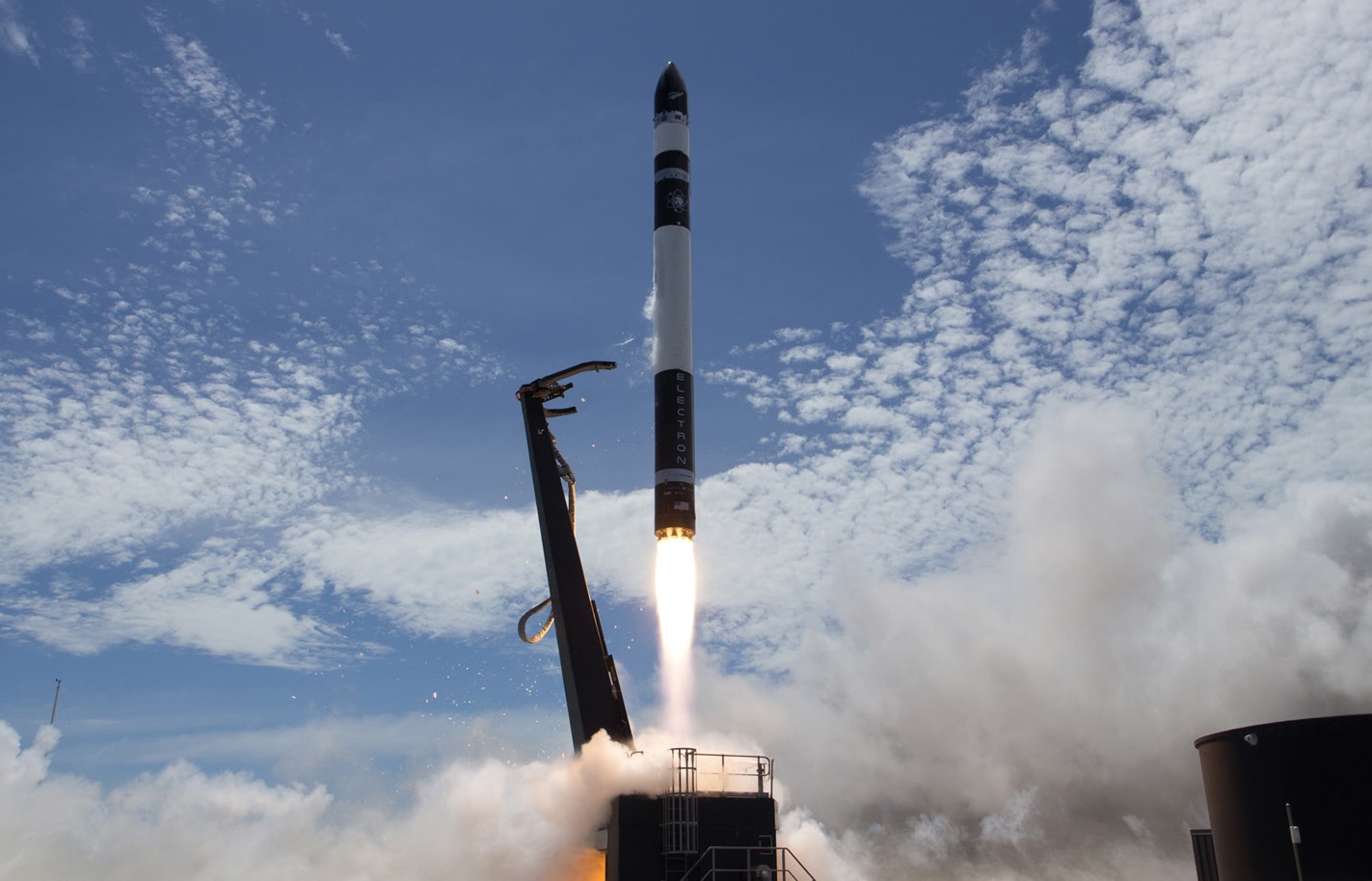
An Electron rocket launching during a previous test.
During their 10th mission with their Electron rocket, they took a crucial first step – testing the re-entry systems to bring the booster back to Earth’s atmosphere. Rocket Lab says the test went better than expected, which bodes well from moving to an actual test of properly recovering and refurbishing the thing.
The other big launch this week was SpaceX’s CRS-19 launch, which delivered 5,200 lbs of experiments and supplies to the ISS. This launch used a brand new Falcon 9, which SpaceX recovered with a landing at sea, and it also employed a Dragon cargo capsule that the company has flown twice before. On board, there’s a load of amazing new equipment for the ISS, like a ‘robot hotel.’
You may not have heard, but there’s an advanced Alexa for astronauts called CIMON, and after a successful first test, it’s headed back to the ISS aboard the above SpaceX launch with improvements. One of its key improvements is a new ability to detect and respond to human emotions, which is, you know, HAL territory.
SpaceX is getting closer to a key piece of the puzzle when it comes to its ability to launch astronauts on its commercial crew spacecraft. The company needs to do at least 10 parachute tests in a row to get ship-shape for its crew launch, and it’s now pretty close to getting that done before year’s end.
Boeing is also getting closer to its own commercial crew launch, and in fact completed an entire rehearsal of how the mission will go on on launch day when it does its uncrewed launch. This rehearsal including fully feeling the rocket, and next time that happens, it’ll be taking off.
X-Wing starfighters ascended through the night sky over Orlando, Florida this week as Disney celebrated the opening of its new ‘Rise of the Resistance’ attraction at Disney World. The X-Wings (2 of them!) were modified versions of a large cargo drone that Boeing has been developing, but both companies are keeping mum on any further details right now.
What’s going on with space tech, and why is it having a moment? What’s coming next, and where is the smart money going? The answers to those questions and more lie in Starburst founder and aerospace investor François Chopard’s informative deck about space and defense, available exclusively to Extra Crunch subscribers.
After a three-day trial, Elon Musk was found not liable for defamation in a federal court today in Los Angeles, where Musk reportedly owns a cluster of six homes as well as oversees the operations of both SpaceX and Tesla.
British diver Vernon Unsworth had brought the suit against Musk in the fall of 2018 after Musk tweeted that Unsworth was a “pedo guy,” meaning a pedophile. Why: after Musk and his employees developed what they called a mini-submarine or escape pod to save a children’s soccer team from a flooded cave in Thailand in July of 2018, Unsworth — a stranger to Musk and an experienced diver with knowledge of the cave — called the production a “PR stunt” when asked about the effort in an interview with CNN.
Musk could “stick his submarine where it hurts,” Unsworth told the reporter.
Soon after, Musk hit the “tweet” button, publishing the now-infamous insult.
Unsworth brought the suit after Musk doubled down on his accusation, describing Unsworth as a “child rapist” in August 2018 emails to Buzzfeed. He claimed in court this week that since “being branded a pedophile” by Musk, he has felt “vulnerable and sometimes, when I’m in the U.K., I feel isolated.”
Unsworth — who in addition to being a diver is a financial consultant who divides his time between England and Thailand — was seeking damages from Musk to the tune of $190 million, including actual, assumed, and punitive damages. Indeed, this week, his team tried to make the point that what he was seeking is a pittance for Musk, who was told to estimate his own net worth during the trial and guessed it to be roughly $20 billion, based on his Tesla and SpaceX holdings.
During the trial, Musk apologized repeatedly for the “pedo guy” tweet, saying that what he’d really meant was “creepy old man.” Musk’s attorney also defended Musk’s temper, telling Unworth at one point: “Do you believe Mr Musk is so cold-hearted that he was sending over this sub with no regard for the children’s lives? . . . Are you willing to apologize to Mr Musk for saying that it was just a PR stunt?”
Unsworth declined, saying his insult was “to the tube and not Mr. Musk personally.”
In the end, the court decided Musk’s outburst wasn’t meant as a statement of fact.
CNBC notes in a separate report that the verdict could “set a precedent where free speech online, libel and slander are concerned” as among the first court cases brought by a private individual over a tweet.
Whether it emboldens Musk is another question. Musk is an avid user of Twitter and this isn’t the first time tweets have landed him in hot water.
A tweet-related battle with the Securities and Exchange Commission last year ultimately cost Musk $20 million and his role as chairman of Tesla for at least three years.
As part of the settlement, Musk also agreed to a condition stipulating that he get pre-approval before sending social media posts containing information that is “material” to Tesla investors. In April of this year, the two sides struck an updated deal that narrowed the scope of what Musk can’t tweet about without first receiving outside approval.
Unsworth had reportedly fought not to cry during the trial, saying he was “effectively given a life sentence with no parole.” He said, “It feels very raw. I feel humiliated, ashamed, dirtied.”
Unsworth was among the rescuers who ultimately led the young soccer team to safety. He received an honorable mention from the Thai government along with 186 other people. Among them: Elon Musk.
It didn’t take much for the founders of Cora, Brazil’s newest startup to tackle some aspect of the broken financial services industry in the country, to raise their first $10 million.
Igor Senra and Leo Mendes had worked together before — founding their first online payments company, MOIP, in 2005. That company sold to WireCard in 2016 and after three years the founders were able to strike out again.
They built their initial business servicing the small and medium sized businesses that make up roughly two-thirds of the Brazilian economy and represent some trillion dollars worth of transactions. But at WireCard, they increasingly were told to approach larger customers that didn’t have the same kind of demand for their services, according to Mendes.
So they built Cora — a technology enabled lender to the small and medium-sized businesses that they knew sowell.
The round was led by Kaszek Ventures, one of Latin America’s largest and most successful investment funds, with participation from Ribbit Capital — one of the most influential early-stage fintech investment firms globally.
“We created Cora to pursue our life purpose, which is to solve the financial problems faced by small and medium businesses. These businesses produce 67% of the Brazilian GDP but are totally underserved by the traditional banks”, said Senra, the company’s chief executive, in a statement.
The company is currently operating in closed beta and plans to launch its first product, a free SME-only mobile account in the first half of 2020, according to the statement. Cora will later release a portfolio of payments, credit related products, and financial management tools that are currently being developed.
“So far, large financial institutions have mainly built products that focus either on individuals or on large corporate clients and have totally ignored small and medium sized enterprises, who are the most relevant creators of value in our economies,” said Mendes in a statement. “We want to offer a high-quality, customer-centric suite of financial products that address the specific underserved needs of our clients’ businesses.”
Qualcomm’s holding its big annual get-together this week in Hawaii, portioning off Snapdragon news, piece by piece. Yesterday’s event was the big unveiling of the Snapdragon 865 and 765, the chips that will power most of next year’s premium and mid-tier handsets, respectively.
Today, the components came into sharper focus. Expect more from both tomorrow, as well, as the company continues to milk them for the multi-day event, but we’re starting to get a pretty solid picture of what these chips will be able to do.
Let’s start top-down with the 865. Expect the premium chip to start showing up in announcements around CES and MWC, if past years’ road maps are any indication. As anticipated, 5G is one of the key focuses. After all, 2020 is generally believed to be when 5G-driven purchases will start helping to right long-flagging smartphone sales.
No integrated 5G has been announced for the chip. Instead, it will work in tandem with Qualcomm’s 5G modem, the X55. Keep in mind, there are still going to be plenty of non-5G alternative flagships released in the next calendar year. For starters, the devices are bound to be prohibitively expensive. Also, in many markets, 5G coverage will be spotty, at best. Unfortunately, however, it seems that manufacturers will have to buy them as a pair.
Notably, there’s support for a wide range of 5G frequencies. That’s necessary, because carrier approach to 5G has been pretty piecemeal. It varies a good deal from carrier to carrier — and in the case of some, like T-Mobile, a good deal within the carrier.
AI’s the other big marquee bit. Again, no surprise. It’s been an increasingly important aspect of smartphone evolution for several years now. That’s powered by a fifth-gen AI chip that doubles the performance of its predecessor.
There’s also on-board support for wake word listening for use with the likes of Alexa and Assistant, at low power. Imaging improvements include support for 200 megapixel photos and 8K, along with much-improved speeds. On the display/gaming front, there’s now support for 144Hz refresh rates.
The arrival of the 765, meanwhile, highlights Qualcomm’s ambitions to speed up 5G adoption across a wider range of devices. The new chip, which features an option with integrated 5G, could certainly help on that front, keeping cost and power usage down.
Noted Silicon Valley venture capital fund Sequoia Capitalhas raised nearly $1 billion for later-stage U.S. investments and roughly $2.4 billion for venture and growth deals in China, according to paperwork filed with the U.S. Securities and Exchange Commission on Tuesday.
The firm, famous for its investments in U.S. companies like Google, Instagram, Dropbox, LinkedIn, Snap and WhatsApp, is also an investor in some of China’s most successful startups.
These are companies like Alibaba, China’s e-commerce answer to Amazon; Ant Financial, a multibillion-dollar financial services powerhouse; JD.com, another e-commerce powerhouse; ByteDance, the owner of America’s latest social media sensation, TikTok; and Yitu, one of the national leaders in the development of machine learning applications.
These investments have not come without their share of controversy abroad. Yitu has been linked to the technology dragnet currently in place in Xinjiang, where an estimated 1 million religious and ethnic minorities are currently interned. Meanwhile, TikTok’s popularity in the U.S. has come with accusations of censorship in its treatment of posts that were supportive of both Xinjiang’s imprisoned population and the dissidents protesting mainland China’s increasing control over Hong Kong politics.
Setting politics aside, Sequoia has brought in $1.8 billion for its Sequoia Capital China Growth Fund V and about $550 million for Sequoia Capital China Venture Fund VII, per filings with the Securities and Exchange Commission.
It’s a sign that when valuations are concerned (ByteDance alone is now worth $78 billion, according to some reports), investors can overlook the potential political pitfallsof dealing with China.
Sequoia, led by Doug Leone, Michael Moritz, Roelof Botha and others, recently sought $8 billion for a global fund, its largest-ever fundraise, holding a first close of $6 billion in June 2018. In addition, the firm operates Sequoia Capital India, with offices in Menlo Park, Bengaluru, Mumbai, New Delhi, Singapore, Tel Aviv, Beijing, Hong Kong and Shanghai.
News of the fund comes at the tail end of another strong year for venture capital fundraising in the U.S. Firms, including 41-year-old NEA, filed to raise as much as $3.6 billion for a single fund. Meanwhile, Norwest Venture Partners, DCVC and Accel all closed new vehicles exceeding $500 million.
Fronted, a new London-based startup aiming to make life easier for renters, is breaking cover today.
The company, founded by Jamie Campbell, Simon Vans-Colina, and Anthony Mann — former employees at Bud, Monzo and Apple, respectively — will launch early next year with a fintech product to help renters finance their rental deposits.
The plan is get accepted into the FCA “sandbox” program (run by the U.K. financial services regulator) to begin lending cash that can only be used for a rental deposit.
The thinking is that by using Open Banking and other financial technology and offering a credit product designed to finance deposits directly, Fronted can lend more cheaply than existing options, such as credit cards, pay-day lenders, and overdrafts, or insurance-backed membership schemes, and at lower risk.
“Renting sucks — anyone who rents knows it,” Fronted CEO Jamie Campbell tells me. “There are so many problems to solve and we intend to tackle them all bit by bit. But first, we are going to pay people’s rent deposits for them so they can pay us back in bite-size manageable amounts. Deposits are a large upfront expense and most people either use mum and dad to sort it out or stay where they are (in the worst cases they do to pay-day lenders)”.
In a call late last week with Campbell and CTO Vans-Colina, the pair explained that renters that apply to use the Fronted service will be asked to link their bank using Open Banking, therefore sharing their recent transaction data, and provide details of the property they wish to rent. Then, once Fronted has run the required checks and agreed to provide credit, the startup sends the money directly to the estate agent to be placed in the U.K.’s Deposit Protection Scheme, meaning that the loan never touches the renter’s hands (or wallet).
“Customers will have a direct debit to pay us back over a set schedule, or they can pay it all off when they have the money to do so, [and] we don’t charge any fees,” says Campbell. There is also a planned “holiday mode” that will allow customers to temporarily reduce their monthly payments in order to help avoid falling into financial difficulty.
“Ultimately this first product is designed to be very convenient and we believe people will opt for this more manageable alternative to a normal deposit,” adds Campbell. “There are customers of ours that will be in ‘hidden households’ unable to move because of the upfront fees… Deposits can [also] sometimes take a long time to be returned from the schemes (something the government recently launched an enquiry into). Fronted wants to serve people who might otherwise be ‘double-exposed’ by deposits. We hope this first product increases social mobility by providing liquidity when people need it”.
Initially, Fronted will generate revenue through interest charged. It then plans to extend its fintech product offering with additional money-advance services “to help smooth out the bumps of renting”.
“We also intend on rolling out a ‘turn up and turn on’ service for utilities and internet,” says the Fronted CEO.
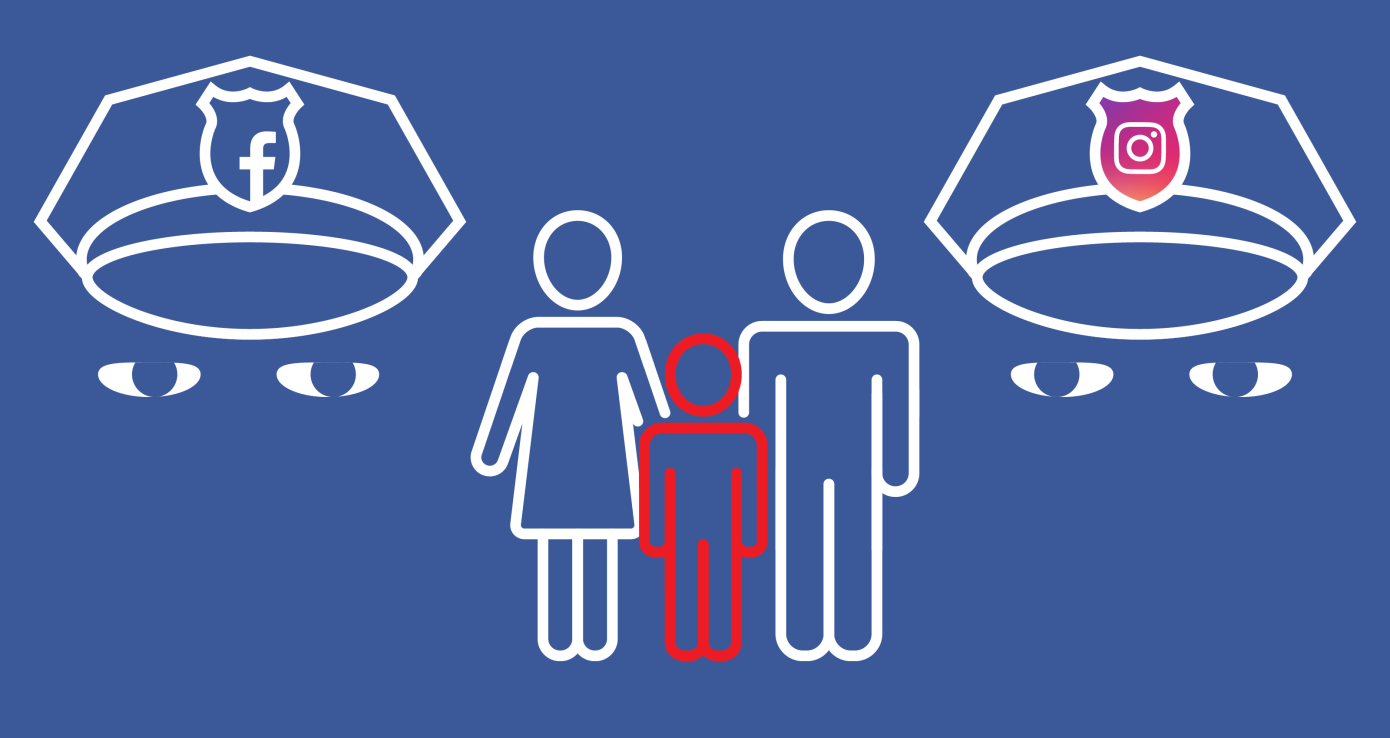
Instagram dodges child safety laws. By not asking users their age upon signup, it can feign ignorance about how old they are. That way, it can’t be held liable for $40,000 per violation of the Child Online Privacy Protection Act. The law bans online services from collecting personally identifiable information about kids under 13 without parental consent. Yet Instagram is surely stockpiling that sensitive info about underage users, shrouded by the excuse that it doesn’t know who’s who.
But here, ignorance isn’t bliss. It’s dangerous. User growth at all costs is no longer acceptable.
It’s time for Instagram to step up and assume responsibility for protecting children, even if that means excluding them. Instagram needs to ask users’ age at sign up, work to verify they volunteer their accurate birthdate by all practical means, and enforce COPPA by removing users it knows are under 13. If it wants to allow tweens on its app, it needs to build a safe, dedicated experience where the app doesn’t suck in COPPA-restricted personal info.
Minimum Viable Responsibility
Instagram is woefully behind its peers. Both Snapchat and TikTok require you to enter your age as soon as you start the sign up process. This should really be the minimum regulatory standard, and lawmakers should close the loophole allowing services to skirt compliance by not asking. If users register for an account, they should be required to enter an age of 13 or older.
Instagram’s parent company Facebook has been asking for birthdate during account registration since its earliest days. Sure, it adds one extra step to sign up, and impedes its growth numbers by discouraging kids to get hooked early on the social network. But it also benefits Facebook’s business by letting it accurately age-target ads.
Most importantly, at least Facebook is making a baseline effort to keep out underage users. Of course, as kids do when they want something, some are going to lie about their age and say they’re old enough. Ideally, Facebook would go further and try to verify the accuracy of a user’s age using other available data, and Instagram should too.
Both Facebook and Instagram currently have moderators lock the accounts of any users they stumble across that they suspect are under 13. Users must upload government-issued proof of age to regain control. That policy only went into effect last year after UK’s Channel 4 reported a Facebook moderator was told to ignore seemingly underage users unless they explicitly declared they were too young or were reported for being under 13. An extreme approach would be to require this for all signups, though that might be expensive, slow, significantly hurt signup rates, and annoy of-age users.
Instagram is currently on the other end of the spectrum. Doing nothing around age-gating seems recklessly negligent. When asked for comment about how why it doesn’t ask users’ ages, how it stops underage users from joining, and if it’s in violation of COPPA, Instagram declined to comment. The fact that Instagram claims to not know users’ ages seems to be in direct contradiction to it offering marketers custom ad targeting by age such as reaching just those that are 13.
Instagram Prototypes Age Checks
Luckily, this could all change soon.
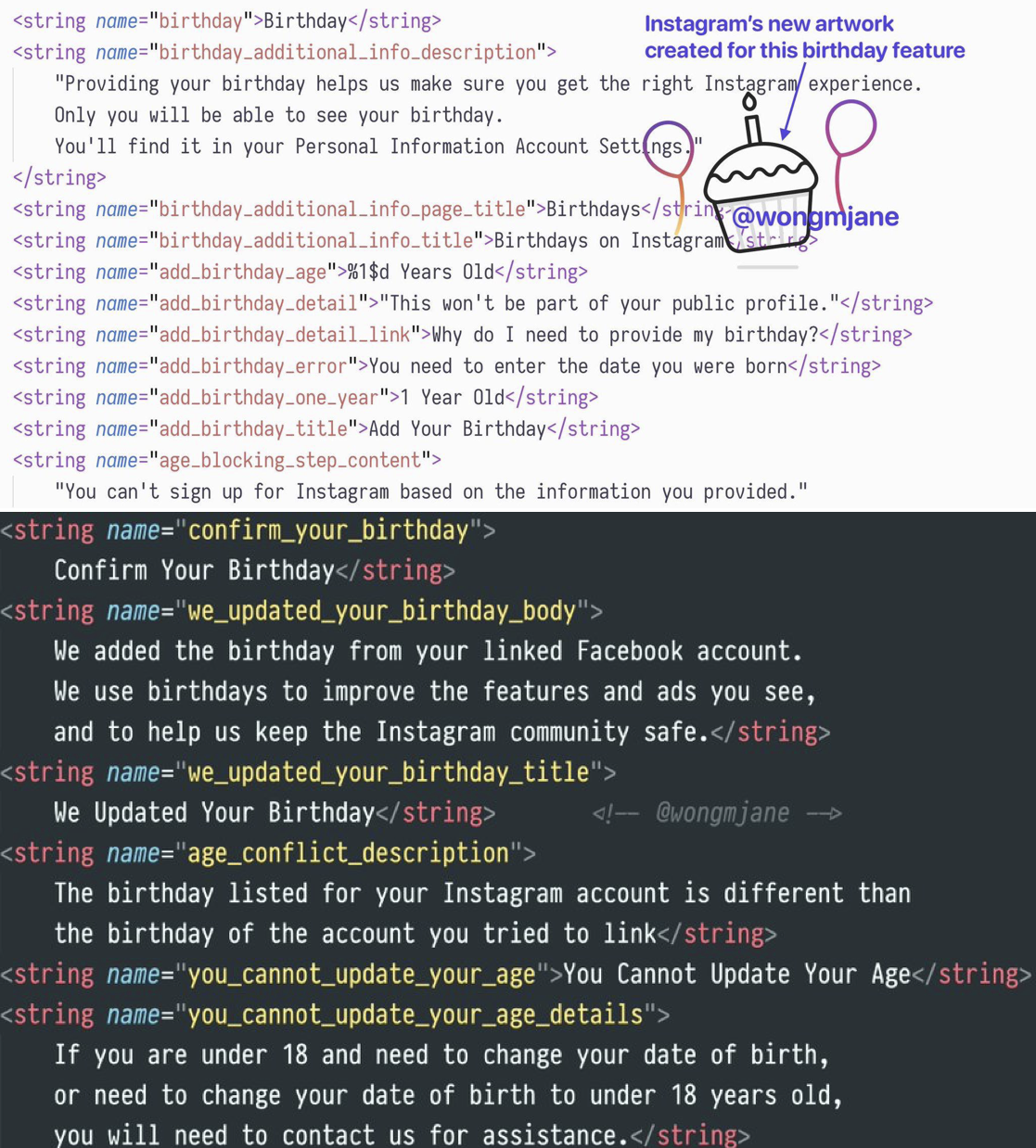
Mobile researcher and frequent TechCrunch tipster Jane Manchun Wong has spotted Instagram code inside its Android app that shows it’s prototyping an age-gating feature that rejects users under 13. It’s also tinkering with requiring your Instagram and Facebook birthdates to match. Instagram gave me a “no comment” when I asked about if these features would officially roll out to everyone.
Code in the app explains that “Providing your birthday helps us make sure you get the right Instagram experience. Only you will be able to see your birthday.” Beyond just deciding who to let in, Instagram could use this info to make sure users under 18 aren’t messaging with adult strangers, that users under 21 aren’t seeing ads for alcohol brands, and that potentially explicit content isn’t shown to minors.
Instagram’s inability to do any of this clashes with it and Facebook’s big talk this year about its commitment to safety. Instagram has worked to improve its approach to bullying, drug sales, self-harm, and election interference, yet there’s been not a word about age gating.
Meanwhile, underage users promote themselves on pages for hashtags like #12YearOld where it’s easy to find users who declare they’re that age right in their profile bio. It took me about 5 minutes to find creepy “You’re cute” comments from older men on seemingly underage girls’ photos. Clearly Instagram hasn’t been trying very hard to stop them from playing with the app.
Illegal Growth
I brought up the same unsettling situations on Musically, now known as TikTok, to its CEO Alex Zhu on stage at TechCrunch Disrupt in 2016. I grilled Zhu about letting 10-year-olds flaunt their bodies on his app. He tried to claim parents run all of these kids’ accounts, and got frustrated as we dug deeper into Musically’s failures here.
Thankfully, TikTok was eventually fined $5.7 million this year for violating COPPA and forced to change its ways. As part of its response, TikTok started showing an age gate to both new and existing users, removed all videos of users under 13, and restricted those users to a special TikTok Kids experience where they can’t post videos, comment, or provide any COPPA-restricted personal info.
If even a Chinese app social media app that Facebook CEO has warned threatens free speech with censorship is doing a better job protecting kids than Instagram, something’s gotta give. Instagram could follow suit, building a special section of its apps just for kids where they’re quarantined from conversing with older users that might prey on them.
Perhaps Facebook and Instagram’s hands-off approach stems from the fact that CEO Mark Zuckerberg doesn’t think the ban on under-13-year-olds should exist. Back in 2011, he said “That will be a fight we take on at some point . . . My philosophy is that for education you need to start at a really, really young age.” He’s put that into practice with Messenger Kids which lets 6 to 12-year-olds chat with their friends if parents approve.
The Facebook family of apps’ ad-driven business model and earnings depend on constant user growth that could be inhibited by stringent age gating. It surely doesn’t want to admit to parents it’s let kids slide into Instagram, that advertisers were paying to reach children too young to buy anything, and to Wall Street that it might not have 2.8 billion legal users across its apps as it claims.
But given Facebook and Instagram’s privacy scandals, addictive qualities, and impact on democracy, it seems like proper age-gating should be a priority as well as the subject of more regulatory scrutiny and public concern. Society has woken up to the harms of social media, yet Instagram erects no guards to keep kids from experiencing those ills for themselves. Until it makes an honest effort to stop kids from joining, the rest of Instagram’s safety initiatives ring hollow.
 You may not have heard, but there’s an advanced Alexa for astronauts called CIMON, and after a successful first test, it’s headed back to the ISS aboard the above SpaceX launch with improvements. One of its key improvements is a new ability to detect and respond to human emotions, which is, you know, HAL territory.